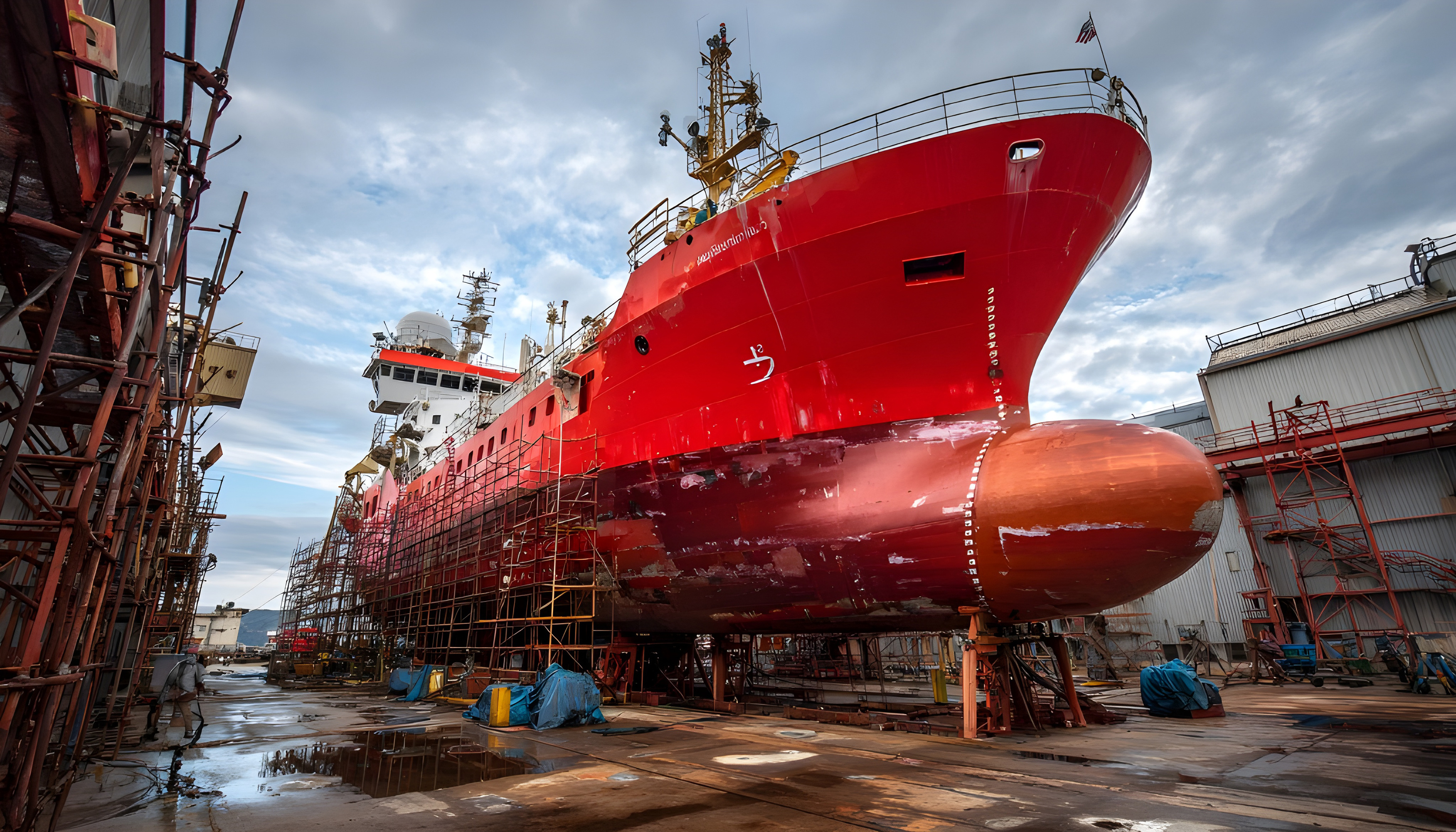
Shipyards globally are operating in a materially different risk landscape than even five years ago. Newbuilds are larger, contract structures are tighter, stakeholders are more numerous, and tolerance for delay or error continues to shrink.
At the same time, many shipyard insurance programmes remain structured around a simpler operating model - one that assumed lower aggregation, less contractual complexity, and a clearer separation between physical loss and financial consequence.
Public market data supports this shift. The global shipbuilding market now exceeds USD 160bn annually and is forecast to grow steadily over the coming decade, while owner investment in new tonnage reached record levels in 2024, the highest since the 2007/08 cycle. As asset values, contract sizes, and stakeholder scrutiny increase, the financial impact of delay, misalignment, or uninsured exposure scales disproportionately.
This growing mismatch between contractual exposure and insurance response is now one of the most common sources of uninsured loss, dispute, and balance sheet volatility for shipyards.
Across global shipbuilding markets, yards face a rising and interconnected set of exposures. Rather than a series of discrete technical risks, today’s challenges reflect the growing complexity of vessel design, contract structures and stakeholder interfaces. Higher value vessels and conversions increasingly incorporate alternative fuels, advanced propulsion systems and bespoke engineering, developments that naturally expand both technical and financial exposure.
Contract structures have also evolved. Where frameworks were once relatively standardised, many now include liquidated damages regimes, refund guarantees, complex financing conditions and negotiated carve outs to knock for knock arrangements, creating obligations that extend far beyond traditional physical risk.
This complexity is amplified by the expanding number of project counterparties. Owners, EPC partners, subcontractors, class societies, financiers and government bodies all introduce additional points of interface, each carrying its own uncertainty. Delivery schedules continue to compress, and performance expectations now leave minimal tolerance for delay or deviation.
These pressures are compounded by ongoing supply chain fragility and tighter financial conditions. Constraints on components, labour and equipment increase the risk that minor disruptions escalate into schedule critical events, while higher interest rates and stricter financing terms have reduced the capacity of shipyard balance sheets to absorb delay or uninsured loss without material impact.
While comprehensive, public loss data for shipyards remains limited, available insurer experience and project risk analysis show a consistent pattern: the most material financial impacts increasingly arise from contractual misalignment, delay and escalation, rather than from physical damage alone.
These pressures sit against a backdrop of sustained claims inflation since COVID, with higher steel prices, labour shortages and supply chain disruption materially increasing the cost of repair, delay and escalation across marine risks. Geopolitical tensions and renewed tariffs on industrial inputs have further amplified loss severity, increasing the balance sheet impact of both insured events and uninsured contractual disruption.



Many regions, including Asia, Europe, the Middle East and North America, are now pursuing ambitious shipbuilding expansion strategies. These initiatives span national fleet renewal, naval and strategic vessel programmes, offshore energy transition projects and large scale shipyard modernisation efforts. Their scope and pace are materially increasing the risk intensity faced by yards.
For example, the U.S. Navy’s most recent budget submissions signal a step change in shipbuilding demand. The Department of the Navy has requested approximately USD 65.8bn for shipbuilding in FY 2027 alone, alongside a wider programme of over USD 300bn through FY 2031 to procure new surface combatants, submarines and auxiliary vessels. These commitments represent the largest sustained shipbuilding investment in decades and place significant pressure on yard capacity, workforce availability and supply chains. As similar programmes accelerate globally, shipyards are increasingly engaging with unfamiliar counterparties, reduced slot availability and more stringent contractual and indemnity frameworks that often extend beyond assumptions embedded in standard insurance placements.
When insurance programmes are not recalibrated to meet these contractual realities, uninsured exposure often becomes visible only when a dispute or delay has already crystallised.
Defence and government projects introduce a distinctive risk profile. These contracts typically include stringent insurance and indemnity clauses, elevated deductibles and retentions, and mandatory flow down requirements that subcontractors must meet. Standard SRL, GL or builders risk programmes do not always respond to these enhanced obligations, particularly where performance based triggers or financial exposures are dominant.
Public oversight bodies continue to highlight cost overruns and schedule slippage across major defence shipbuilding programmes. This reinforces the importance of aligning contractual commitments with insurance response from the outset, rather than relying on generic programme structures.
The rapid expansion of offshore wind, LNG carriers, alternative fuel vessels and high spec offshore support units is reshaping shipyard exposure profiles. These programmes increasingly include complex, specialist and, in some cases, autonomous or remotely operated vessels deployed across both commercial offshore energy and naval applications. Together, they bring higher capital values, longer construction durations and milestone based payment structures that heighten financial sensitivity to delay or defect. They also attract greater scrutiny from owners, class, financiers and regulators, all of whom impose specific performance, testing and risk transfer expectations.
Compounding this, offshore energy projects have faced 30–50% capital cost inflation since 2021, significantly amplifying the financial impact of any disruption. For technologically complex and emerging vessel types, including autonomous platforms, contractual responsibility during construction, integration and early trials is often less clearly defined. As a result, many projects now require tailored insurance solutions that extend beyond the scope of standard builders’ risk or liability programmes.
Across regions, shipyards continue to experience uninsured losses that stem less from physical incidents and more from how contractual risk is allocated and how policies respond in practice. These losses frequently arise from contractual liabilities that were not transferred to insurance, disputes involving delay or liquidated damages, aggregated exposure across multiple concurrent builds and interface related claims between owners, subcontractors and third parties.
A recurring challenge is the disconnect between contract requirements and insurance triggers, which leads to expectation gaps during claims and uncertainty over who ultimately bears the financial burden. Industry data supports this experience: more than 35% of shipbuilding projects report delay linked to labour or supply chain pressures, while global orderbooks are now at their highest levels in more than a decade, factors that heighten aggregation risk and increase the likelihood of dispute.
Download your copy of the full report.

More sophisticated shipyards are responding to this changing landscape by aligning insurance programmes directly with the realities of their contract terms, rather than relying on generic risk categories. They are stress testing policies using realistic loss and delay scenarios, deploying project specific solutions alongside annual placements and separating catastrophic balance sheet protection from routine operational volatility.
They are also increasingly prioritising advisers who understand shipbuilding contracts as deeply as they understand insurance markets, allowing risk to be structured more intentionally and transparently.
A more resilient insurance model begins with contract led risk identification, ensuring that any obligations extending beyond standard policy response are addressed before they can crystallise into uninsured loss. From there, shipyards increasingly use project specific solutions, such as builders risk, excess liability, credit structures, guarantees or political risk cover to ensure exposures are placed in the appropriate market rather than forced into an annual programme.
Equally important is protecting the balance sheet from low frequency but high severity events, and accessing a broader pool of specialist insurers capable of supporting complex marine projects.
| Theme | Implications for Shipyards (Insureds) |
|---|---|
| Primary loss drivers | Material losses increasingly arise from delay, contract breach, and interface failure, not just physical damage. |
| Contractual framework | Contract terms frequently allocate risk beyond standard policy response, creating uninsured exposure if not addressed upfront. |
| Aggregation risk | Concurrent builds and higher values mean multiple contracts can crystallise loss simultaneously. |
| Timing of loss emergence | Issues typically surface mid project, when leverage is highest and insurance flexibility lowest. |
| Programme structure | Annual programmes alone are insufficient; project specific and financial risk solutions are increasingly required. |
| Severity vs frequency | Low frequency events now carry disproportionately high financial impact. |
| Risk transfer clarity | Shipyards need certainty over which risks sit with insurers and which remain on balance sheet. |
| Underwriting differentiation | More sophisticated yards gain advantage by demonstrating contractual discipline and risk transparency. |
| Role of advisers | Value comes from advisers who can translate contracts into insurable solutions across multiple risk types. |
Our role extends beyond placement. We help shipyards transfer risk intentionally, not by assumption.
Our consultative support includes:
Shipyards are being asked to carry more contractual and operational risk to compete globally. The question is not whether the risk exists, but where it ultimately sits:
That outcome should be deliberate and controlled.
If you would like to explore whether your current insurance arrangements reflect the realities of your contracts and operations, we would welcome a conversation.
Our experts publish insightful thought leadership, market updates, and industry news publications to keep you informed and ahead of the curve. Subscribe to receive the latest updates straight to your inbox.